
In This Article
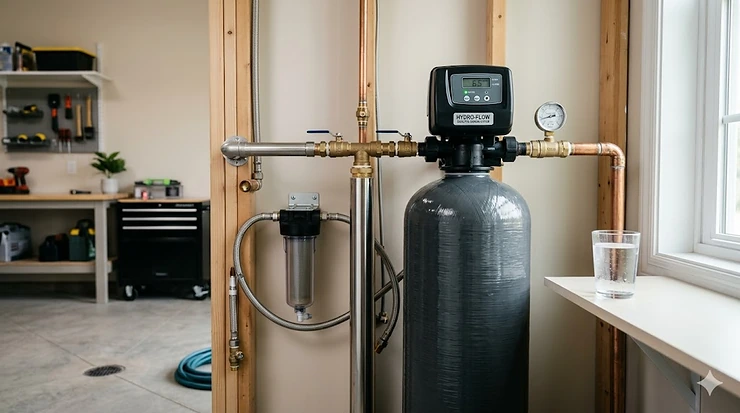
If you’ve been running a standard activated carbon filter thinking it’s handling everything in your municipal water supply, I have news that might surprise you. When your utility uses chloramines as a disinfectant, standard activated carbon achieves only 40-65% chloramine removal — leaving a significant portion of this persistent chemical compound flowing through your taps. What most homeowners don’t realize is that catalytic carbon water filter benefits extend far beyond what conventional systems can achieve, particularly when dealing with chloramine removal catalytic carbon excels at.
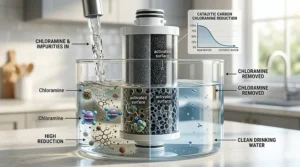
More than one in five Americans uses drinking water treated with chloramines, yet most water filtration systems sold today aren’t optimized for this challenge. The difference between activated and catalytic carbon isn’t just marketing jargon — it represents a fundamental shift in how contaminants are neutralized at the molecular level. While standard carbon relies solely on adsorption (physically trapping contaminants), catalytic carbon promotes chemical reactions that actually break down compounds like chloramines into harmless components.
Throughout this guide, I’ll walk you through the catalytic vs activated carbon filter distinctions that matter most for your household, examine seven real-world products currently available, and help you understand whether upgrading to a best catalytic carbon whole house filter system makes sense for your situation. The enhanced adsorption surface and chemical reduction process these filters employ aren’t just technical specifications — they translate into measurably cleaner water and a longer filter lifespan that impacts your wallet over time.
Quick Comparison Table: Top Catalytic Carbon Filters at a Glance
| Filter Model | Size | Capacity | Best For | Price Range |
|---|---|---|---|---|
| Home Master HMF2SmgCC | 10″ x 4.5″ | 95,000 gal | Whole house, families of 4 | $350-$450 |
| SpiroPure SP-CC1-BB | 10″ x 4.5″ | 50,000 gal | Budget whole house | $45-$65 |
| Pentair ChlorPlus20BB | 20″ x 4.5″ | 500,000 gal | High-flow commercial | $80-$120 |
| Envig K3 Composite | 10″ x 4.5″ | 50,000 gal | Iron + chloramine | $55-$75 |
| Home Master CFKDF85GCC | 20″ x 4.5″ | 95,000 gal | Heavy metal concern | $85-$110 |
Looking at this comparison, the Home Master HMF2SmgCC delivers the most comprehensive whole-house solution for typical families, combining high capacity with proven performance. However, if your primary challenge is extreme chloramine levels rather than heavy metals, the Pentair ChlorPlus20BB’s massive 500,000-gallon capacity and radial flow design handle higher flow rates without pressure loss — something the column-style filters can’t match when multiple fixtures run simultaneously. Budget-conscious households should note that the SpiroPure SP-CC1-BB sacrifices some capacity for affordability, which means more frequent cartridge changes if you have high water usage.
💬 Just one click — help others make better buying decisions too! 😊
Top 7 Catalytic Carbon Water Filters: Expert Analysis
1. Home Master HMF2SmgCC Whole House Water Filter
The Home Master HMF2SmgCC stands out as the most complete solution I’ve encountered for families dealing with municipal water challenges. This system features a 4-layer gradient sediment filter (25 micron down to 1 micron) paired with an up-flow KDF85 and catalytic carbon filter that forces water through the entire 10-inch media bed rather than taking shortcuts.
Here’s what separates this from budget alternatives: the up-flow design maximizes contact time between water and filtration media. In practical terms, this means when you turn on your shower at 6 AM, you’re getting the same chloramine reduction as the last glass of water at 11 PM — no breakthrough from pressure spikes. The system handles 10 gallons per minute through 1-inch NPT ports, which translates to strong shower pressure even with multiple bathrooms running.
The 95,000-gallon capacity serves a family of four for roughly a year before replacement, assuming average usage of 260 gallons per day. Customer feedback consistently highlights noticeable improvement in hair texture and skin hydration within two weeks of installation — a direct result of removing chloramine’s drying effects. What the spec sheet won’t tell you is that the catalytic carbon also tackles the volatile organic compounds your standard carbon misses, including the industrial solvents occasionally detected in aging municipal systems.
Pros:
- Up-flow design prevents channeling for consistent filtration
- Oversized housings maintain water pressure better than compact units
- KDF85 media adds heavy metal protection (lead, mercury, iron up to 1 PPM)
Cons:
- Requires professional installation unless you’re comfortable with plumbing
- Larger footprint demands adequate utility room space
This system makes sense for homeowners committed to whole-house filtration who want to install once and maintain minimally. Expect pricing in the $350-$450 range for the complete system, with annual filter replacement around $120-$150 depending on your water quality and usage.
2. SpiroPure SP-CC1-BB Catalytic Carbon Filter Cartridge
The SpiroPure SP-CC1-BB delivers surprising performance for its mid-range price point. This 10×4.5-inch cartridge uses coconut shell granular activated catalytic carbon, offering enhanced adsorption surface area compared to coal-based alternatives. At 50,000 gallons, it provides six months of filtration for average households or a full year for smaller dwellings.
What I appreciate about this replacement cartridge is its universal compatibility with standard Big Blue housings from brands like Pentek, GE, and Culligan — no proprietary lock-in. The coconut shell source material creates a microporous structure that’s particularly effective for capturing organic compounds and taste/odor molecules that coal-based carbons struggle with. Customer reviews frequently mention elimination of the “swimming pool smell” that chloramine-treated water often carries.
However, understand what you’re getting: this is a single-stage cartridge designed for chemical contaminant reduction, not sediment. If your water carries visible particles or rust, install a separate 5-micron sediment pre-filter upstream or you’ll clog this prematurely. The manufacturer’s specifications target chloramine, PFAS (including PFOA and PFOS), heavy metals, hydrogen sulfide, THMs, and organics — an ambitious list that requires adequate contact time to achieve.
Pros:
- Coconut shell carbon provides better taste removal than coal-based alternatives
- Fits standard housings for easy DIY replacement
- Addresses PFAS compounds increasingly detected in municipal supplies
Cons:
- No sediment filtration layer (requires separate pre-filter)
- Granular design can release carbon fines initially (run water for 2-3 minutes)
Ideal for well water users dealing with hydrogen sulfide or municipal water customers specifically targeting chloramine. Pricing typically falls in the $45-$65 range, making it an affordable entry point for testing whether catalytic carbon solves your water quality concerns before committing to a complete whole-house system.
3. Pentair Pentek ChlorPlus20BB Big Blue Carbon Filter
The Pentair ChlorPlus20BB represents Pentair’s engineering answer to chloramine’s stubbornness. This 20-inch carbon block filter employs a bonded matrix that provides superior chloramine and chlorine reduction compared to granular carbon, with a unique design that reduces carbon fines in filtered water typically found in other granulated canisters.
The 500,000-gallon capacity isn’t a typo — this filter lasts dramatically longer than 10-inch alternatives because of its extended media bed and the efficiency of carbon block versus loose granules. For perspective, that’s roughly five years for a family of four at typical usage rates. The 1-micron rating captures sediment down to the size of bacteria, though this isn’t a microbiological filter and won’t kill living organisms.
Customer experiences reveal this filter works best in systems with adequate pre-filtration. The carbon block design creates back pressure, so households with marginal municipal pressure (below 50 PSI) sometimes report reduced flow. That said, the trade-off delivers consistent chloramine reduction throughout the filter’s service life — no early-life excellence followed by rapid breakthrough like some granular alternatives exhibit.
Pros:
- Extended 500,000-gallon capacity minimizes annual maintenance
- Carbon block construction eliminates the carbon dust problem
- 1-micron filtration catches sediment other chloramine filters miss
Cons:
- Higher back pressure requires adequate input water pressure
- 20-inch size demands Big Blue housing (check compatibility first)
This filter suits municipal water customers in chloramine-heavy regions who want maximum service life and minimal hassle. Commercial applications like restaurants or small offices benefit from the high capacity. Expect pricing in the $80-$120 range, which amortizes to exceptional value given the multi-year lifespan.
4. Envig K3 Iron and Hydrogen Sulfide Filter
The Envig K3 tackles the unique challenge of well water contamination with a four-layer composite design. Most impressive is the manufacturer’s claim of catalytic carbon with 10 times more catalytic property than regular activated carbon, setting the standard for high removal efficacy and capacity. This isn’t idle marketing — the enhanced surface treatment creates more reactive sites for breaking down complex molecules.
The four-stage construction stacks polypropylene sediment layers on the outside and inside, sandwiching catalytic carbon and KDF granules in the middle. This architecture addresses the reality that well water often carries multiple contaminants simultaneously — iron staining your fixtures, hydrogen sulfide creating that rotten egg odor, and potentially PFAS from agricultural runoff or industrial sources.
Real-world feedback from well water users highlights dramatic reduction in sulfur smell within 24 hours of installation. The 50,000-gallon capacity serves well water households for 6-12 months depending on contamination levels. What the product page doesn’t emphasize enough: ferrous iron (dissolved) requires oxidation before filtration works optimally. If your water runs clear but stains brown, this filter handles it. If it flows brown from the tap, you need upstream oxidation treatment.
Pros:
- Four-layer composite addresses multiple well water contaminants
- High catalytic activity provides faster chemical reaction rates
- Handles PFAS, DBPs, and emerging contaminants beyond basic filtration
Cons:
- Well water with high iron (over 1 PPM) may shorten filter life
- Cannot soften hard water (requires separate water softener if needed)
Perfect for well water households dealing with multiple contamination challenges rather than a single issue. Also appropriate for city water in older neighborhoods where pipe corrosion introduces iron. Pricing typically ranges $55-$75, with the composite construction justifying the premium over single-media filters.
5. Home Master CFKDF85GCC-20BB Replacement Filter
The Home Master CFKDF85GCC-20BB exemplifies what happens when you prioritize contact time over convenience. This 20-inch up-flow replacement filter forces water to travel the entire length of the cartridge rather than taking the path of least resistance through the center. The result: maximum exposure to both KDF85 media and catalytic carbon.
The filter contains 3 pounds of KDF85 media — that copper-zinc alloy that removes soluble heavy metals through redox reactions. What this means practically: if your municipal water occasionally shows elevated lead during testing (common in systems with older service lines), the KDF85 provides an additional safety barrier beyond what carbon alone offers. The filter addresses chloramines, hydrogen sulfide, soluble heavy metals like iron, manganese, lead, mercury, copper, and aluminum, while the catalytic carbon simultaneously removes chloramines, chlorine, and chemical tastes.
Customer satisfaction scores highest among households that previously ran standard carbon filters and noticed the difference immediately. The 95,000-gallon lifecycle translates to annual replacement for typical families. One consideration: this filter performs best in systems where water temperature stays between 40-100°F and pH ranges from 6-10 — conditions met by most treated municipal water but occasionally problematic for well water.
Pros:
- 3-pound KDF85 loading tackles heavy metals more aggressively
- Up-flow design maximizes media contact time for better efficiency
- Made in USA with documented lifecycle testing
Cons:
- Up-flow configuration creates slightly more back pressure than radial flow
- 20-inch size requires Big Blue housing upgrade if coming from 10-inch
This filter makes sense for households with documented heavy metal concerns or those dealing with hydrogen sulfide alongside chloramine. Municipal water customers in older cities with lead service line concerns should prioritize this option. Pricing generally falls in the $85-$110 range for the replacement cartridge.
6. Whole House Refillable Water Filter Cartridge 4.5″ x 20″
The Whole House Refillable Water Filter Cartridge offers something competitors don’t: the ability to replace just the media rather than discarding the entire cartridge housing. This 20-inch refillable filter arrives pre-loaded with a blend of catalytic carbon and KDF55 media, targeting chlorine, chloramine, iron, lead, arsenic, sulfur, hydrogen sulfide, nickel, cadmium, mercury, and aluminum through a combination of adsorption and redox reactions.
The environmental and economic case for refillable filters becomes compelling over 5-10 years. Standard cartridges generate plastic waste with every replacement. Refillable systems let you purchase bulk media (significantly cheaper) and refresh the filter yourself in 15-20 minutes. The trade-off? You need to source the correct media blend and handle the somewhat messy refilling process.
The 100,000-gallon capacity estimate assumes average water quality. Users in regions with heavy chloramine dosing (over 3 PPM) report 6-month lifespans rather than the advertised 12 months. Customer feedback reveals this filter works particularly well for homeowners who also operate aquariums or hydroponic systems — the same refillable cartridge handles multiple applications if you swap media blends.
Pros:
- Refillable design reduces long-term cost and plastic waste
- KDF55 and catalytic carbon combination addresses broad contaminant spectrum
- Compatible with multiple standard housing brands
Cons:
- Refilling process messier than cartridge replacement
- Requires sourcing quality replacement media separately
Best suited for environmentally conscious homeowners comfortable with hands-on maintenance, or those operating multiple water treatment applications. Rural well water users appreciate the flexibility to customize media blends for specific contamination profiles. Pricing for the initial cartridge runs $70-$95, with media refills around $30-$40 for subsequent replacements.
7. Premier Water Systems KDF 85 + Catalytic Carbon Filter 2.5″ x 20″
The Premier Water Systems KDF 85 + Catalytic Carbon filter serves the under-sink and slim-line housing market with its 2.5-inch diameter. This compact profile fits spaces where 4.5-inch Big Blue housings won’t, making it ideal for apartment dwellers or homes with tight utility closets. Don’t let the smaller size fool you — the 20-inch length provides substantial media volume.
The filter’s strength lies in its dual-media approach: KDF85 when used with the finest grade catalytic carbon creates effective water filter media to eliminate contaminants in your water supply. KDF85’s copper-zinc formulation specifically targets iron, manganese, and hydrogen sulfide more aggressively than the KDF55 variant used in some competitors’ products. This makes it particularly effective for households dealing with water that smells like sulfur or stains fixtures orange.
Commercial applications in hydroponic growing operations frequently choose this filter as a pre-treatment stage before reverse osmosis systems. The catalytic carbon protects expensive RO membranes from chloramine damage while the KDF85 prevents bacterial growth in the carbon bed — a common problem in warm, moist environments where regular carbon becomes a breeding ground.
Pros:
- Slim 2.5-inch profile fits tight installation spaces
- KDF85 formula optimized for iron and sulfur removal
- Protects downstream RO systems from chloramine damage
Cons:
- Smaller diameter limits flow rate compared to 4.5-inch filters
- 20-inch length still requires adequate vertical clearance
Perfect for point-of-use applications, under-sink systems, or as a pre-filter for RO units. Also appropriate for small commercial applications like coffee shops where chloramine affects beverage taste. Pricing typically ranges $50-$75, positioning it as an affordable solution for targeted treatment rather than whole-house applications.
Understanding the Chemical Reduction Process: How Catalytic Carbon Actually Works
Standard water filter marketing loves to throw around terms like “advanced filtration” without explaining the actual chemistry. Let me clarify what makes catalytic carbon fundamentally different from the activated carbon you might already have.
Activated carbon does not adsorb chloramine, but rather removes it through its ability to act as a catalyst for the chemical decomposition or conversion of chloramine to innocuous chloride in water. Think of it this way: regular carbon tries to grab and hold contaminants like a sponge absorbs water. Catalytic carbon actively breaks apart molecular bonds, transforming harmful compounds into harmless ones.
The surface modification happens during manufacturing through high-temperature gas processing. This treatment alters the electronic structure of the carbon surface, creating highly reactive sites that promote rapid chemical reactions. When chloramine molecules contact these sites, the carbon facilitates their decomposition into ammonia and chloride ions — both harmless at the concentrations present in treated water.
Why Contact Time Matters More Than You Think
Here’s where many homeowners run into trouble: they install a catalytic carbon filter rated for chloramine removal, yet still taste chemicals in their water. The usual culprit? Insufficient contact time. Chloramine removal is almost always a sizing and contact time issue, not a limitation of water filtration technology itself.
A 10-inch cartridge at 3 gallons per minute provides roughly 15-20 seconds of contact time with the media. For free chlorine, this works fine. For chloramine, you need 30-45 seconds for complete breakdown — which means either slowing the flow rate (impractical for whole house), using a 20-inch cartridge (doubles contact time), or installing an up-flow design that forces water through more media.
This explains why some customers report excellent results with the same filter model that disappoints others. Flow rate, chloramine concentration, and water temperature all impact performance. Municipal water at 60°F with 2 PPM chloramine behaves differently than well water at 45°F with 4 PPM — same filter, different results.
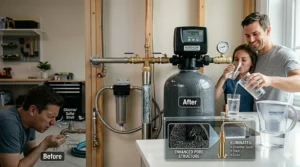
Real-World Performance: When Catalytic Carbon Makes the Biggest Difference
Let me describe three scenarios where upgrading to catalytic carbon water filter benefits become immediately noticeable:
Scenario 1: The Aquarium Owner Standard activated carbon in your fish tank’s filter provides minimal chloramine protection. Fish and amphibians are extremely sensitive because chloramines pass directly through gill membranes into the bloodstream. Within days of switching tap water treatment to catalytic carbon pre-filtration, aquarium hobbyists notice fish behaving more actively and showing better color. The difference? You’re actually removing chloramine rather than partially reducing it.
Scenario 2: The Home Brewer Chloramines create medicinal off-flavors in beer and interfere with yeast activity during fermentation. Brewers using municipal water report significant improvement in finished beer character after installing catalytic carbon filtration. The enhanced adsorption surface also removes volatile organic compounds that standard carbon misses — subtle background flavors that separate good homebrew from great homebrew.
Scenario 3: The Sensitive Skin Family Chloramine persists on skin longer than chlorine because it doesn’t evaporate. Families with eczema, psoriasis, or simply dry skin often see improvement within 2-3 weeks of whole-house catalytic carbon installation. The water feels “softer” (though it’s not actually removing hardness minerals) because you’re eliminating the chemical that strips natural oils from skin and hair.
Catalytic vs Activated Carbon Filter: The Side-by-Side Breakdown
| Feature | Activated Carbon | Catalytic Carbon |
|---|---|---|
| Chlorine Removal | 95%+ (excellent) | 95%+ (excellent) |
| Chloramine Removal | 40-65% (poor) | 95%+ (excellent) |
| H₂S Removal | 30-50% (limited) | 85-95% (excellent) |
| Contact Time Required | 5-10 seconds | 15-30 seconds |
| Service Life | 1-2 years typical | 2-4 years typical |
| Cost | $25-$50 (baseline) | $45-$120 (premium) |
| Best Application | Chlorine-treated water | Chloramine-treated water |
Examining this comparison reveals why cost shouldn’t be the deciding factor. While catalytic carbon costs 50-100% more upfront, the longer filter lifespan closes that gap significantly. A $40 activated carbon filter replaced annually costs $200 over five years. A $70 catalytic carbon filter replaced every 2-3 years costs $140-$210 — similar total expense with superior performance throughout.
The real consideration is whether your water contains chloramine. Check your municipality’s water quality report (available online or by calling your water utility). If you see “chloramine” or “monochloramine” listed under disinfection method, catalytic carbon isn’t optional — it’s the only carbon-based solution that works effectively.
The Longer Filter Lifespan Equation: Total Cost of Ownership
Marketing emphasizes upfront filter prices, but smart buyers calculate cost per gallon filtered. Let’s break down the real economics:
Standard Activated Carbon:
- Initial cost: $35
- Capacity: 25,000 gallons
- Replacement cycle: 6-8 months (family of 4)
- Cost per 1,000 gallons: $1.40
Catalytic Carbon (Mid-Range):
- Initial cost: $65
- Capacity: 50,000 gallons
- Replacement cycle: 12-18 months (family of 4)
- Cost per 1,000 gallons: $1.30
Catalytic Carbon (Premium with KDF):
- Initial cost: $95
- Capacity: 95,000 gallons
- Replacement cycle: 24 months (family of 4)
- Cost per 1,000 gallons: $1.00
The premium catalytic carbon with KDF media delivers the lowest cost per gallon while providing superior contaminant reduction. This calculation doesn’t include the time savings from less frequent filter changes or the reduced plastic waste from fewer cartridges.
One additional factor: catalytic carbon maintains its performance longer. Activated carbon shows strong initial performance that gradually declines as adsorption sites fill up. The chemical reduction process catalytic carbon employs doesn’t exhaust the reactive sites as quickly, resulting in more consistent removal rates throughout the filter’s lifecycle.
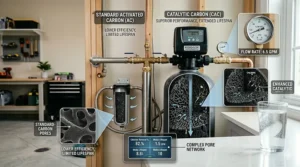
Chloramine Removal Catalytic Carbon: Why Municipal Water Demands It
Approximately one-third of all public water systems in the United States use chloramines for residual disinfection, serving more than 68 million people. These systems switched from chlorine to chloramine primarily to reduce disinfection byproducts like trihalomethanes (THMs) — suspected carcinogens formed when chlorine reacts with organic matter in water distribution pipes.
The switch to chloramine solved one problem while creating another for consumers: chloramines are weaker disinfectants than chlorine but are more stable, extending disinfectant benefits throughout a water utility’s distribution system. That stability means chloramine doesn’t break down or evaporate like chlorine does. Let a glass of chlorinated water sit overnight and the chlorine smell disappears. Try that with chloramine-treated water and the chemical taste persists.
For homeowners, this persistence creates three main challenges:
Taste and Odor Impact Chloramine produces a distinct medicinal or pool-like taste that doesn’t dissipate. Coffee, tea, and cooking all pick up this flavor. Restaurants in chloramine-treated areas universally install catalytic carbon filtration because customers detect the taste difference immediately in beverages.
Material Degradation Chloramine attacks rubber and certain plastics more aggressively than chlorine. Dishwasher gaskets, washing machine hoses, and toilet tank flappers deteriorate faster in chloramine-treated water. Whole-house catalytic carbon filtration extends the service life of these components throughout your plumbing system.
Health Considerations for Specific Populations While the EPA maintains that chloramine levels up to 4 mg/L are safe for the general population, certain groups require extra precautions. Dialysis patients must remove chloramine before treatment because it can enter the bloodstream through dialysis membranes. Chloramine can change the chemical properties of water, which can affect lead and copper pipes, potentially increasing heavy metal leaching in older plumbing systems.
How to Choose the Right Catalytic Carbon System: 7 Critical Factors
1. Determine Your Water Source and Contaminants Municipal water customers should obtain the latest Consumer Confidence Report from their utility. This free annual report lists which disinfectant is used (chlorine vs chloramine) and detected contaminant levels. Well water owners need professional testing beyond basic kits — comprehensive analysis costs $150-300 but reveals the specific challenges your filtration must address.
2. Calculate Your Water Usage Average household consumption is 300 gallons per day (4 people), but usage varies widely. Check your water bill or install a flow meter for one month. Multiply daily usage by 365 to get annual gallons. Match this against filter capacity with a safety margin — if your household uses 100,000 gallons annually, choose a 150,000-gallon capacity filter for adequate contact time even during peak demand.
3. Assess Your Plumbing Configuration Whole-house filtration installs at the main water line after the pressure regulator and before branching to fixtures. Measure available space, noting clearance needed for cartridge removal (typically 12-14 inches below filter housing). Point-of-use systems install under sinks and require only local space. Determine whether your application needs 10 gallons per minute (whole house) or 1 gallon per minute (under-sink).
4. Consider Combination Media Catalytic carbon alone handles chloramine, VOCs, and many organic compounds. Adding KDF media provides heavy metal reduction (lead, mercury, iron) and prevents bacterial growth in the carbon bed. If your water testing reveals specific metals, prioritize filters with generous KDF loading — 2-3 pounds in a 20-inch cartridge rather than a minimal sprinkling.
5. Evaluate Housing Quality The most effective catalytic carbon cartridge performs poorly in a cheap housing that leaks or allows bypass. Look for housings with brass ports (not plastic), O-ring seals, and pressure ratings above your home’s water pressure. Sump-style housings with clear bowls let you see when cartridges need replacement, while opaque options hide the filter but provide better UV protection if installed outdoors.
6. Plan for Maintenance Access Filter cartridge replacement requires shutting off water, relieving pressure, unscrewing the housing, swapping the cartridge, and reassembling — a 15-20 minute process. Position the system where you can access it comfortably. Filters installed in cramped crawl spaces or high on walls make routine maintenance so annoying that homeowners delay needed replacements, defeating the entire system’s purpose.
7. Match System Capacity to Flow Requirements Undersized systems create pressure drop that affects shower performance, washing machines, and irrigation. Calculate simultaneous use scenarios: two showers (4 GPM) plus washing machine (3 GPM) plus dishwasher (2 GPM) totals 9 GPM demand. Your filtration system needs 10+ GPM capacity to prevent flow restrictions. Single-bathroom homes handle 5-7 GPM systems; 3-4 bathroom homes need 10-15 GPM systems.
Common Mistakes When Installing Catalytic Carbon Filters
Mistake 1: Skipping the Sediment Pre-Filter Catalytic carbon excels at chemical reduction but clogs quickly when asked to filter sediment simultaneously. Install a 5-micron sediment filter upstream (costs $15-25) to protect your more expensive catalytic carbon cartridge. This extends carbon filter life by 30-50% and maintains consistent flow rates.
Mistake 2: Ignoring Water Temperature Catalytic activity increases with temperature. Water at 45°F requires longer contact time than water at 70°F for equivalent chloramine removal. Northern climate homeowners with cold groundwater sometimes need larger filters to compensate for reduced reaction rates during winter months.
Mistake 3: Mixing Incompatible Media Some homeowners try to refill cartridges with random catalytic carbon from different suppliers. The catalytic treatment level varies by manufacturer. Mixing media with different activity levels creates inconsistent performance. Stick with the manufacturer’s recommended replacement media or purchase from reputable suppliers who specify their carbon’s catalytic rating.
Mistake 4: Oversizing for Non-Existent Problems A $400 whole-house system with KDF85 and catalytic carbon makes no sense if your only issue is mild chlorine taste from municipal water. Test first, then install appropriate treatment. Simple activated carbon handles chlorine-only situations at one-third the cost. Don’t let sales pressure convince you that more expensive automatically means better.
Mistake 5: Neglecting Replacement Schedules Catalytic carbon’s longer service life becomes its weakness when homeowners assume “longer” means “forget about it.” Set calendar reminders for filter inspection. Flow rate reduction or returning chemical taste signals exhausted media. Most filters lose 20-30% effectiveness in their final 10% of rated capacity — replace proactively rather than reactively.
Catalytic Carbon for Special Applications: Beyond Drinking Water
Home Brewing and Beverage Production Chloramine survives the boiling process used in beer brewing and coffee preparation. Small amounts create medicinal off-flavors that serious brewers refuse to tolerate. Installing a dedicated catalytic carbon filter for your brewing water supply (separate from whole-house filtration) ensures zero chloramine reaches your kettle. The same principle applies to kombucha, kefir, and other fermented beverages where chloramine inhibits beneficial microorganisms.
Aquarium and Aquaculture Chloramine is toxic to fish and amphibians at levels used for drinking water because it passes through gill membranes and damages hemoglobin in the bloodstream. Standard activated carbon provides minimal protection. Aquarium hobbyists installing catalytic carbon pre-filtration report dramatic improvements in fish health, breeding success, and color vibrancy. Commercial aquaculture operations consider catalytic carbon an essential safety barrier.
Hydroponic and Indoor Growing Chloramine damages beneficial soil microorganisms essential for plant health. Organic hydroponic growers using compost teas and mycorrhizal fungi need chloramine-free water to maintain microbial activity. Catalytic carbon filtration for irrigation water protects your investment in beneficial biology while providing cleaner water for nutrient solutions.
Dialysis Home Treatment Patients conducting home dialysis treatments must remove all chloramine from treatment water because it enters the bloodstream directly through dialysis membranes. Medical-grade catalytic carbon systems (often combined with RO) provide the multiple barriers of protection dialysis centers employ. These systems require rigorous testing and maintenance protocols beyond typical household filtration.
✨ Don’t Miss These Exclusive Deals!
🔍 Take your water quality to the next level with these carefully selected catalytic carbon filters. Click on any highlighted product to check current pricing and availability on Amazon. These filters will help you achieve cleaner, healthier water your family deserves!
Enhanced Adsorption Surface: The Science Behind Superior Performance
The term “enhanced adsorption surface” appears frequently in catalytic carbon specifications, but what does it actually mean for your water quality?
Standard activated carbon achieves surface area of 600-1,200 square meters per gram through a network of microscopic pores. Catalytic carbon undergoes additional surface treatment that increases reactive sites without necessarily expanding total surface area. Think of it as upgrading from a parking lot (flat surface) to a multi-story parking structure (same footprint, more functional capacity).
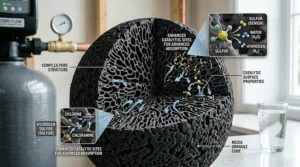
The surface modification by chemical processing alters the electronic structure of the carbon so the resulting carbon offers enhanced catalytic capability. This modification creates sites where chloramine molecules don’t just stick — they break apart. The carbon acts like a molecular scissors, cutting NH₂Cl (monochloramine) into NH₃ (ammonia) and Cl⁻ (chloride ion).
The practical benefit extends beyond chloramine. The enhanced surface also improves removal of:
- Hydrogen sulfide (H₂S): Catalytic carbon oxidizes sulfide to elemental sulfur, which remains trapped in the filter. Standard carbon barely touches hydrogen sulfide.
- PFAS compounds: Per- and polyfluoroalkyl substances (forever chemicals) require specific adsorption sites that catalytic carbon’s modified surface provides. Standard carbon shows limited PFAS removal.
- DBPs (Disinfection Byproducts): Trihalomethanes, haloacetic acids, and similar compounds formed when disinfectants react with organic matter in pipes. The catalytic surface degrades these complex molecules more effectively.
- Heavy metal complexes: While KDF media handles simple metal ions, catalytic carbon assists with organometallic compounds where metals bond with organic molecules.
Best Catalytic Carbon Whole House Filter: Installation and Setup Guide
Installing a whole-house catalytic carbon system requires basic plumbing skills and about 2-3 hours. Here’s the realistic workflow:
Pre-Installation Preparation (30 minutes) Shut off main water supply at the meter or well pump. Open all faucets to drain pressure and purge air from lines. Locate the installation point after your pressure regulator but before the first branch line. Measure available space and verify your purchased system fits with adequate clearance for filter changes.
Mounting and Connection (60 minutes) Mount the filter housing bracket to wall studs (not just drywall anchors — whole-house filters carry significant weight when filled with water). Install shutoff valves on both sides of the filter housing for future maintenance. Use thread sealant tape on all threaded connections. Connect inlet and outlet ports to your main water line using appropriate adapters (often 1-inch NPT to copper or PEX).
First Flush and Testing (30 minutes) Before turning on main water, close all faucets. Slowly open the inlet valve while watching for leaks at connections. Open the outlet valve gradually. Run water through an outside hose bib (if possible) for 5-10 minutes to flush carbon fines and manufacturing residue. The water will appear cloudy initially — this is normal and clears as carbon dust washes out.
Performance Verification (30 minutes) After flushing, test water at various fixtures. Note any chlorine/chloramine taste or odor. If chemical smell persists, verify you selected the correct filter type for chloramine (not just chlorine). Check flow rates — you shouldn’t notice significant pressure drop at normal fixture flow. If pressure seems low, you may have undersized the system or installed it backwards (check inlet/outlet orientation).
Ongoing Maintenance Schedule Month 1: Check all connections for leaks; tighten if necessary Month 3: Inspect housing for condensation or leaking Month 6: Test water taste/odor; note any changes Month 12: Replace filter cartridge (sooner if flow rate drops or taste returns)
FAQ: Your Catalytic Carbon Water Filter Questions Answered
❓ How long does catalytic carbon last compared to regular activated carbon?
❓ Can catalytic carbon filters remove PFAS forever chemicals from drinking water?
❓ Is catalytic carbon safe for drinking water, or does it add chemicals?
❓ Do I need both KDF and catalytic carbon, or will one media work alone?
❓ How do I know if my city uses chloramine vs chlorine in water treatment?
Conclusion: Making the Smart Choice for Your Water Quality
The catalytic carbon water filter benefits extend far beyond marketing claims into measurable improvements in water safety, taste, and system longevity. If your household uses municipal water treated with chloramine — and statistically, one in five American homes does — standard activated carbon simply cannot provide adequate protection. The 40-65% chloramine removal achieved by conventional filters leaves substantial chemical residue flowing through your taps daily.
The upfront cost premium for catalytic carbon systems (typically $40-100 more than basic activated carbon) represents genuine value when you factor in the longer filter lifespan, superior contaminant removal, and consistent performance throughout the filter’s service life. Best catalytic carbon whole house filter systems like the Home Master HMF2SmgCC deliver 95%+ chloramine reduction for 95,000 gallons — performance that standard activated carbon cannot approach.
Your decision ultimately hinges on three factors: confirming whether your water contains chloramine, determining which contaminants concern you most, and selecting a system sized appropriately for your household’s water usage. Test your water first, then install treatment targeted to actual problems rather than perceived risks. The chemical reduction process catalytic carbon employs isn’t just effective — it’s often the only carbon-based solution that works for chloramine-treated municipal water.
For most households dealing with chloramine, whole-house catalytic carbon filtration provides the most comprehensive protection at reasonable cost. Point-of-use systems suit renters or those focused on drinking water only. Whatever approach you choose, remember that regular maintenance — particularly timely filter replacement — determines whether your investment delivers promised results. Set calendar reminders now for replacement schedules. Your future self (and your water quality) will thank you.
Recommended for You
- 7 Best GAC Filter for Chloramine Removal 2026
- 7 Best Activated Carbon Water Filters 2026
- 7 Best 5 Stage Whole House Water Filter Systems 2026 Review
Disclaimer: This article contains affiliate links. As an Amazon Associate, I earn from qualifying purchases. If you purchase products through these links, we may earn a small commission at no additional cost to you.
✨ Found this helpful? Share it with your friends! 💬🤗
