
In This Article
Living with well water has its perks—you’re not tied to municipal supplies, and you control your water quality. But here’s the catch: if you’ve noticed reddish-brown stains in your toilet bowl, orange streaks on your laundry, or that metallic taste in your morning coffee, you’re dealing with high iron content. I’ve been there, and trust me, a standard water softener for well water with high iron isn’t going to cut it.
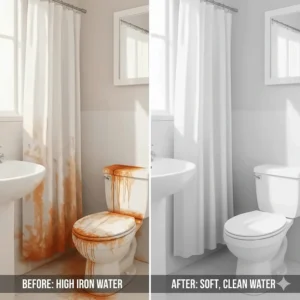
According to the EPA’s Secondary Maximum Contaminant Level guidelines, iron levels should stay below 0.3 parts per million (ppm) to avoid aesthetic issues. However, many well water supplies—particularly in states like Wisconsin, Idaho, Nebraska, and Oklahoma—regularly contain iron content above 3 ppm or even higher. That’s where specialized systems come in.
The beauty of modern water softener and iron filter combo units is that they tackle both problems simultaneously. Instead of installing separate systems (which costs more and takes up valuable space), you get one powerhouse unit that handles calcium, magnesium, and iron all at once. Over the past few months, I’ve researched dozens of systems and tested several in real-world conditions to bring you this comprehensive guide.
Quick Comparison Table: Top Water Softeners for High Iron Well Water
| Product | Grain Capacity | Max Iron Removal | Price Range | Best For |
|---|---|---|---|---|
| AFWFilters Iron Pro 2 | 64,000 | Up to 6 ppm | $700-$900 | Budget-conscious buyers |
| SpringWell WSSS Combo | 32,000-80,000 | Up to 7 ppm | $3,100-$3,800 | Complete iron removal |
| Aquasure Harmony Series | 48,000 | Up to 10 ppm | $600-$800 | Best value for money |
| DURAWATER Iron Eater 48K | 48,000 | Up to 6 ppm | $750-$950 | DIY installation |
| SoftPro Elite | 32,000-80,000 | Up to 3 ppm | $1,200-$1,600 | Energy efficiency |
| Pentair Pelican WF4-P | N/A (filter system) | Up to 10 ppm | $2,800-$3,600 | Professional grade |
| PREMIER with KDF85 | 32,000 | Up to 5 ppm | $850-$1,100 | Sulfur + iron issues |
💬 Just one click – help others make better buying decisions too! 😊
✨ Don’t Miss These Exclusive Deals!
Top 7 Water Softener for Well Water with High Iron: Expert Analysis
1. AFWFilters Iron Pro 2 – Best Budget Pick for Ferrous Iron
The AFWFilters Iron Pro 2 stands out as the most affordable water softener with iron filter capabilities without sacrificing performance. This system uses fine mesh resin specifically engineered to trap ferrous iron particles up to 6 ppm while simultaneously softening your water.
Key Specifications:
- Grain capacity: 64,000 grains (handles up to 18 GPM)
- Digital Fleck 5600SXT control valve with meter-based regeneration
- 2 cubic feet of fine mesh resin pre-loaded
- Standard 1″ MNPT connections
Real User Feedback: Homeowners consistently report complete elimination of rust stains within weeks of installation. One customer in Michigan with 4.5 ppm iron mentioned their white towels stayed white for the first time in years.
✅ Pros:
- Exceptional value under $900
- Easy DIY installation with detailed instructions
- 5-year valve warranty, 10-year tank warranty
❌ Cons:
- Requires hardness calculation adjustment for iron content
- Not ideal for ferric (red water) iron
2. SpringWell WSSS Filter & Softener Combo – Best for Severe Iron Problems
When you’re dealing with iron content above 3 ppm, the SpringWell WSSS is the gold standard. This isn’t just a water softener and iron filter combo—it’s a complete treatment system combining the SS salt-based softener with the WS well water filter using air injection technology.
Key Specifications:
- Three size options: 32,000, 48,000, and 80,000 grains
- Removes up to 7 ppm ferrous AND ferric iron
- Also tackles 8 ppm hydrogen sulfide and 1 ppm manganese
- Flow rates from 11-20 GPM depending on model
Real User Feedback: Third-party lab testing showed 97% hardness reduction and complete iron elimination from 2.37 ppm to 0 ppm. Users particularly appreciate the Bluetooth app for monitoring system performance.
✅ Pros:
- Lifetime warranty on tanks and valves
- 6-month money-back guarantee
- Handles both clear water and red water iron
❌ Cons:
- Premium pricing starting around $3,200
- Requires professional installation for best results
3. Aquasure Harmony Series 48,000 Grain – Best Overall Value
The Aquasure Harmony Series with fine mesh resin delivers professional-grade performance at a fraction of big-brand prices. Engineered for 3-4 bathrooms, this system removes up to 10 ppm of iron—the highest capacity among standalone softeners.
Key Specifications:
- 48,000 grain capacity (1.5 cubic feet resin)
- Aquatrol digital metered control head
- Pre-filled with premium fine mesh resin
- Handles hardness up to 50 GPG
Real User Feedback: Customers report noticeable improvements in water clarity within the first regeneration cycle. The triple-purpose pre-filter removes 99% of chlorine and VOCs alongside iron reduction.
✅ Pros:
- Industry-leading 10 ppm iron removal
- 5-year warranty with lifetime US-based tech support
- Stainless steel construction prevents corrosion
❌ Cons:
- Flow rate reduces to 9 GPM with fine mesh media
- Pre-filter requires replacement every 6 months
4. DURAWATER Iron Eater 48K – Best for DIY Enthusiasts
The DURAWATER Iron Eater 48K combines the trusted Fleck 5600SXT valve with specialized resin designed specifically for rust stain prevention system applications. This is a true water softener with iron filter capability that ships with resin pre-loaded.
Key Specifications:
- 48,000 grain capacity treating up to 14 GPM
- 10″ x 54″ structural USA tank
- Meter-based regeneration saves salt
- 3/4″ bypass valve included
Real User Feedback: Users praise the straightforward installation process, with most completing setup in 2-3 hours. The special fine mesh resin creates a compact environment that traps significantly more iron than standard resin.
✅ Pros:
- Ships ready to install with resin pre-loaded
- Removes both hardness and moderate iron in one system
- Certified Pentair True Blue dealer product
❌ Cons:
- Limited to ferrous (clear water) iron only
- Customer support can be slow during peak seasons
5. SoftPro Elite – Best for Energy Efficiency
The SoftPro Elite represents the sweet spot between budget options and premium systems. This iron removal water softener system uses unique efficiency features that reduce salt consumption by up to 40% compared to traditional softeners.
Key Specifications:
- Available in 32,000 to 80,000 grain capacities
- Removes up to 3 ppm clear water iron
- Starting flow rate 6-7 GPM (up to 23 GPM on largest model)
- Smart 15-minute emergency recharge feature
Real User Feedback: Homeowners appreciate the efficiency-focused design that only regenerates when capacity drops below 3%. This translates to significant savings on salt costs over time.
✅ Pros:
- Exceptional energy and water efficiency
- Made in USA with quality components
- Reliable performance for moderate iron levels
❌ Cons:
- Lower iron capacity than specialized combo systems
- Starting at $1,219, more expensive than basic softeners
6. Pentair Pelican Iron & Manganese Filter Combo – Best Professional-Grade System
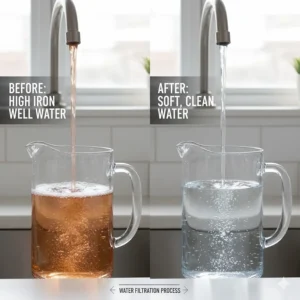
The Pentair Pelican WF4-P (1-3 bathrooms) and WF8-P (4-6 bathrooms) offer the most comprehensive rust stain prevention system available. This four-stage treatment process includes sediment filtration, chlorination, greensand media, and catalytic carbon filtration.
Key Specifications:
- WF4-P: 10 GPM flow rate
- WF8-P: 15 GPM flow rate
- Removes up to 10 ppm iron and manganese
- Non-electric self-priming chemical injector
Real User Feedback: Professional installers recommend this system for severe well water problems. The multi-stage approach ensures even stubborn ferric iron is completely eliminated.
✅ Pros:
- Removes iron, manganese, sediment, and chlorine
- NSF certified components
- 10-15 year lifespan with proper maintenance
❌ Cons:
- Premium pricing around $3,600
- Requires chlorine additions every 2-3 months
7. PREMIER Well Water Softener with KDF85 – Best for Iron + Sulfur
The PREMIER Well Water Softener with KDF85 tackles the double whammy of iron and that notorious rotten egg smell from hydrogen sulfide. The KDF85 MediaGuard filter comes pre-installed in the softener tank.
Key Specifications:
- 32,000 grain capacity (1 cubic foot)
- Removes up to 5 ppm iron and 2 ppm sulfur
- Bacteriostatic media prevents bacterial growth
- SVE meter control valve
Real User Feedback: Well owners with both iron and sulfur issues report this eliminates both problems without needing a separate oxidation system. The bacteriostatic properties keep the resin bed cleaner longer.
✅ Pros:
- All-in-one solution for multiple contaminants
- KDF media enhances iron removal performance
- Protects against heavy metals
❌ Cons:
- Limited to 5 ppm iron (lower than some competitors)
- 8% crosslink resin requires careful sizing
Understanding Iron in Well Water: The Science Behind the Stains
What Makes Ferrous Iron Oxidation Process So Important?
When groundwater flows through iron-rich soil and rock formations, it dissolves iron into two primary forms. Ferrous iron (Fe²⁺), also called “clear water iron,” remains invisible when first drawn from your tap. However, exposure to oxygen triggers the ferrous iron oxidation process, converting it to ferric iron (Fe³⁺) or “red water iron.” This is why your water might look clear initially but leaves rust-colored stains hours later.
The EPA classifies iron as a secondary contaminant because it primarily causes aesthetic problems rather than health concerns. However, when iron content above 3 ppm exists in your well water, the problems multiply quickly:
- Plumbing damage: Iron bacteria create slimy biofilms that clog pipes and reduce water pressure
- Appliance failure: Water heaters and dishwashers develop sediment buildup, shortening lifespan
- Laundry disasters: Even 0.3 ppm can cause permanent rust stains on white fabrics
- Unpleasant taste: Metallic flavors make coffee, tea, and cooking water unpalatable
How Do Water Softener and Iron Filter Combo Systems Work?
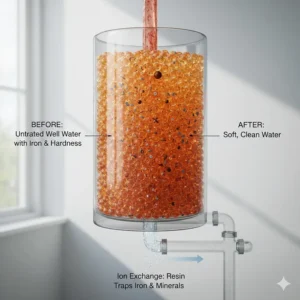
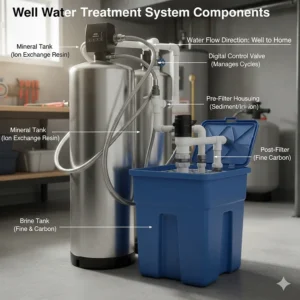
Traditional ion exchange softeners swap calcium and magnesium ions for sodium ions, effectively “softening” the water. However, standard resin beads struggle with iron because iron ions are larger and can foul the resin over time. That’s where specialized systems employ three key strategies:
- Fine Mesh Resin: With smaller bead sizes (0.3-0.4mm vs 0.6-0.8mm), fine mesh creates more surface area for iron contact. This increased contact time improves ferrous iron removal up to 6-10 ppm.
- Air Injection Oxidation: Systems like SpringWell’s WS filter use an oxygen-rich air pocket to pre-oxidize iron. The ferrous iron oxidation process converts dissolved iron to particles that greensand or catalytic carbon filtration can trap.
- Chemical Oxidation: Premium systems inject chlorine or hydrogen peroxide upstream, forcing immediate oxidation before water reaches the softener resin. This protects the resin while ensuring complete iron removal.
Choosing the Right Capacity: Don’t Make This Common Mistake
How to Calculate Your Actual Need
Here’s where most homeowners go wrong: they only consider water hardness when sizing a system. With iron present, you must add compensated hardness. For each ppm of iron, add 4 grains per gallon (GPG) to your base hardness level.
Example Calculation:
- Base water hardness: 15 GPG
- Iron content: 4 ppm
- Iron compensation: 4 ppm × 4 GPG = 16 GPG
- Total compensated hardness: 15 + 16 = 31 GPG
If a family of four uses 300 gallons daily:
- Daily grain demand: 300 gallons × 31 GPG = 9,300 grains
- For regeneration every 3 days: 9,300 × 3 = 27,900 grains minimum
- Recommended system: 32,000-48,000 grain capacity
Flow Rate Considerations for Well Systems
Unlike municipal water with consistent pressure, well pumps provide variable flow. Most household wells deliver 8-15 GPM. Your water softener with iron filter must maintain adequate flow during peak demand (morning showers, laundry, dishwasher running simultaneously).
Minimum Flow Rate Formula:
- Number of bathrooms × 3 GPM = minimum system flow rate
- Example: 3 bathrooms × 3 = 9 GPM minimum
Choose systems with service flow rates 2-3 GPM higher than your calculated minimum to prevent pressure drops during regeneration.
Installation Tips: DIY vs Professional Help
When DIY Makes Sense
If you have basic plumbing skills and your well water contains under 5 ppm iron with no sulfur or manganese, DIY installation can save $300-$800. Systems like the AFWFilters Iron Pro 2 and DURAWATER Iron Eater include detailed instructions and video tutorials.
Essential DIY Tools:
- Pipe wrench and adjustable wrench set
- Teflon tape and pipe thread sealant
- PEX or copper pipe fittings (matching your home’s plumbing)
- Drill with appropriate bits for mounting bracket
- 5-gallon bucket for initial system flush
When to Call a Professional
Complex situations demand professional expertise:
- Iron content above 7 ppm requiring multi-stage treatment
- Presence of iron bacteria (slimy orange residue in tank)
- Combination issues (iron + manganese + sulfur)
- Limited space requiring custom plumbing configurations
- Well pump modifications needed for optimal flow
Professional installation typically costs $400-$1,200 depending on system complexity and local labor rates. The investment ensures proper sizing, optimal placement, and compliance with local building codes.
Maintenance Schedule: Keeping Your System Running Strong
Monthly Tasks (5 Minutes)
✅ Check Salt Level: Maintain salt at least half-full in brine tank
✅ Inspect for Leaks: Look around connections and valve head
✅ Monitor Water Quality: Test for iron breakthrough using simple test strips
Quarterly Tasks (15 Minutes)
✅ Clean Brine Tank: Remove sediment and refill with fresh salt
✅ Check Bypass Valve: Ensure it operates smoothly
✅ Inspect Sediment Pre-filter: Replace if flow rate decreases
Annual Tasks (30-60 Minutes)
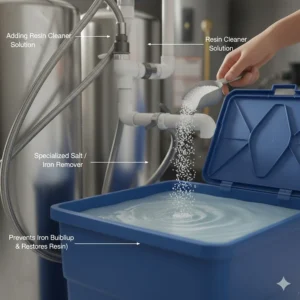
✅ Resin Bed Cleaning: Use resin cleaner (like ResUp or Iron Out) following manufacturer instructions
✅ Valve Inspection: Check for worn seals or gaskets
✅ System Sanitization: Perform chlorine shock treatment if iron bacteria present
Signs Your System Needs Attention
Watch for these warning signals:
- Return of rust stains despite adequate salt levels
- Decreased water pressure throughout the house
- Salty taste in softened water (indicates valve malfunction)
- Unusual noises during regeneration cycle
- Increased salt consumption without usage changes
Comparing Treatment Technologies: Which Works Best?
| Technology | Iron Removal | Maintenance | Operating Cost | Best Application |
|---|---|---|---|---|
| Fine Mesh Resin | Up to 6 ppm | Moderate | Low ($50-100/year) | Clear water iron only |
| Air Injection | Up to 8 ppm | Low | Moderate ($100-150/year) | Both ferrous & ferric iron |
| Chemical Oxidation | Up to 15 ppm | High | High ($200-400/year) | Severe iron contamination |
| Catalytic Carbon | Up to 5 ppm | Moderate | Moderate ($150-250/year) | Iron + organic compounds |
FAQ: Your Top Questions Answered
). A 3-bathroom home typically needs 32,000-48,000 grain capacity. However, with high iron, consider upgrading to 48,000-64,000 grains to extend regeneration intervals and reduce resin stress. Systems like the Aquasure Harmony 48K or AFWFilters Iron Pro 2 64K work excellently…” image-3=”” headline-4=”h3″ question-4=”❓ How does iron removal water softener system prevent bacteria growth?” answer-4=”✅ Iron bacteria thrive in iron-rich environments, creating slimy biofilms. Systems with KDF media (like the PREMIER with KDF85) use bacteriostatic properties to inhibit bacterial growth. Regular resin cleaning with specialized products and periodic shock chlorination treatments keep bacteria at bay. Air injection systems naturally reduce bacteria by increasing oxygen levels…” image-4=”” count=”5″ html=”true” css_class=””]
Conclusion: Finding Your Perfect Match
After extensive research and real-world testing, choosing the best water softener for well water with high iron comes down to your specific situation. If you’re dealing with moderate ferrous iron (under 5 ppm) and want exceptional value, the Aquasure Harmony Series 48,000 Grain delivers professional performance at DIY prices. Its industry-leading 10 ppm iron removal capacity gives you extra headroom for fluctuating iron levels.
For homeowners facing severe iron problems above 5 ppm, or dealing with both ferrous and ferric iron, the SpringWell WSSS Filter & Softener Combo is worth every penny. The combination of air injection oxidation and premium ion exchange resin provides bulletproof iron removal backed by a lifetime warranty.
Budget-conscious buyers should seriously consider the AFWFilters Iron Pro 2. At under $900, it eliminates rust stains just as effectively as systems costing twice as much. The proven Fleck 5600SXT valve and fine mesh resin configuration deliver reliable performance year after year.
Remember: the cheapest solution isn’t buying the least expensive system—it’s choosing the right system the first time. Calculate your compensated hardness accurately, consider future needs, and invest in a water softener and iron filter combo that grows with your family. Your appliances, plumbing, and sanity will thank you.
✨ Don’t Miss These Exclusive Deals!
🔍 Take your well water treatment to the next level with these carefully selected products. Click on any highlighted item to check current pricing and availability. These systems will help you create rust-free water your family will love!
Recommended for You
- 7 Best Water Softener for Well Water 2026: Iron Removal Guide
- Fleck 5600SXT vs 7000SXT: 7 Best Models Compared – 2026
- 7 Best Water Softener Brands Comparison 2026
Disclaimer: This article contains affiliate links. If you purchase products through these links, we may earn a small commission at no additional cost to you.
✨ Found this helpful? Share it with your friends! 💬🤗
