
In This Article
Picture this: you’ve just arrived at your dream campground after a long day on the road. You turn on the shower, ready to relax, but instead of a refreshing rinse, you’re met with that familiar sticky feeling and soap that just won’t lather. Sound familiar? You’re dealing with hard water, and it’s doing more damage to your RV than you realize.
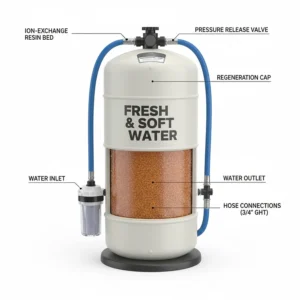
Hard water isn’t just an inconvenience – it’s silently destroying your expensive RV plumbing and appliances. According to the U.S. Department of Energy, water softeners work by drawing heavy minerals out of the water using ion exchange, replacing calcium and magnesium ions with sodium ions. For RV owners traveling across America, where approximately 85% of water sources contain hard water minerals, investing in a portable water softener for RV has become essential for protecting your mobile investment.
The good news? A portable water softener for RV is surprisingly affordable and can save you thousands in appliance repairs down the road. These compact units fit easily in your storage bay, require no electricity, and regenerate in less than 30 minutes with common table salt. Whether you’re a weekend warrior or a full-time RVer, soft water transforms everything from your morning shower to your evening dishes – and your RV’s plumbing system will thank you for years to come.
Quick Comparison Table
| Product | Grain Capacity | Size | Regeneration Time | Price Range | Best For |
|---|---|---|---|---|---|
| On The Go OTG4-DBLSOFT | 16,000 | 22″H x 9.5″D | 30 min | $250-$350 | Large families, extended trips |
| VEVOR RV Water Softener | 16,000 | Compact design | 30 min | $150-$220 | Budget-conscious RVers |
| PRO+AQUA WS-P-16 | 16,000 | 10″ x 19.5″ | 30 min | $200-$280 | Professional-grade performance |
| RVGUARD Portable Softener | 16,000 | Compact | 30 min | $170-$240 | Easy setup, beginners |
| NPGLOBAL RV Softener | 16,000 | Standard | 30 min | $160-$230 | Multi-purpose use |
| On The Go OTG4-StdSoft | 8,000 | 22″H x 6.75″D | 15 min | $150-$200 | Solo travelers, smaller RVs |
| Essential RV Water Softener | 16,000 | 10″ x 22″ | 30 min | $220-$300 | Premium features, longevity |
💬 Just one click – help others make better buying decisions too!😊
Top 7 Portable Water Softener for RV: Expert Analysis
1. On The Go OTG4-DBLSOFT – The Industry Leader
When it comes to portable water softener for RV solutions, the On The Go OTG4-DBLSOFT has earned its reputation as the gold standard. Assembled by U.S. workers in Indiana (not made in China), this On The Go OTG4-DBLSOFT delivers professional-grade performance in a remarkably compact package.
Key Specifications:
- 16,000 grain capacity (largest compact RV softener)
- Dimensions: 22″H x 9.50″ diameter
- Produces 1,600 gallons before regeneration
- 40% more soft water than competitors
With its high-grade premium resin and large mouth opening for easy salt addition, this travel water softener system regenerates with just 2 boxes of common table salt in under 30 minutes. The unit features a convenient carry handle and travel-friendly cap and plug to prevent leakage during transport.
Customer feedback consistently praises its durability and exceptional flow rates with minimal pressure drop. RVers report using the On The Go OTG4-DBLSOFT for years without issues, making it a worthwhile investment despite the higher price point.
✅ Pros:
- Made in USA quality
- 40% more capacity than standard models
- No tools or electricity required
❌ Cons:
- Higher upfront cost
- Slightly heavier than budget models
Price Range: $250-$350
2. VEVOR RV Water Softener – Best Value Champion
The VEVOR RV Water Softener has quickly become a favorite among budget-conscious RVers who refuse to compromise on quality. This compact water softener for motorhome delivers 16,000 grains of softening capacity at a fraction of the cost of premium brands.
Key Specifications:
- 16,000 grain capacity
- Food-grade recyclable resin (5-year lifespan)
- 3/4″ brass fittings with 42″ hose included
- Maximum pressure: 150 PSI
Under a hardness level of 6.5 GPG, the VEVOR RV Water Softener regenerates 2,461 gallons of soft water, providing sustained use for up to 50 days. The durable glass fiber shell and NSF polyethylene tank withstand the rigors of constant travel.
Real users report excellent softening performance that rivals units costing twice as much. The included accessories kit makes installation a breeze, even for first-time users. One verified reviewer noted their calcium buildup moved to “NONE on toilets and sink as well as shower heads and faucets.”
✅ Pros:
- Exceptional value for money
- Complete accessory package
- Durable construction
❌ Cons:
- Some units report occasional leaking issues
- Customer service response times vary
Price Range: $150-$220
3. PRO+AQUA WS-P-16 – Professional-Grade Powerhouse
For RVers who demand the absolute best performance, the PRO+AQUA WS-P-16 stands out as a professional-grade portable water softener for RV that delivers premium results. This lightweight camping filtration system produces 40% more soft water than competing units.
Key Specifications:
- 16,000 grain premium capacity
- Compact size: 10″ x 19.5″
- NSF certified food-grade resin
- 2-year manufacturer warranty
The PRO+AQUA WS-P-16 features a rugged NSF polyethylene tank reinforced with durable fiberglass. Its high-flow 3/4″ garden hose ports ensure minimal pressure drop while maintaining excellent flow rates. The unit requires no electricity and regenerates with 2 boxes of table salt in less than 30 minutes.
Customers love this rechargeable softener cartridge for its consistent performance. One RV owner who had their first unit stolen immediately purchased a replacement, stating “I love this thing!” The unit effectively removes calcium, magnesium, iron, lead, and radium from hard water.
✅ Pros:
- Premium NSF certified components
- Superior soft water production
- Excellent warranty support
❌ Cons:
- Mid-to-high price point
- Requires pre-filtering in very hard water
Price Range: $200-$280
4. RVGUARD Portable Softener – Beginner-Friendly Excellence
The RVGUARD Portable Softener earns high marks for its user-friendly design and comprehensive accessory package. This quick connect RV system makes installation so simple that even first-timers can set it up in minutes.
Key Specifications:
- 16,000 grain capacity
- Food-grade premium resin
- Complete installation kit included
- Fabric cover for protection
What sets the RVGUARD Portable Softener apart is the incredible package of included accessories: fabric cover, fiber cloth, PTFE tape, sealing O-rings, handle, water hose, hose adapters, F-F connector, quick connector, Y-splitter, shut-off valve, and 90° elbow. Everything you need arrives in one box.
Users appreciate the thoughtful design details, from the convenient carry handle to the clear instructions. The unit provides 40% softer water than before installation and effectively reduces hardness minerals that cause scale buildup on pipes and dishes.
✅ Pros:
- Complete accessory package
- Excellent instructions
- Easy setup for beginners
❌ Cons:
- Standard capacity (not enhanced)
- Basic design features
Price Range: $170-$240
5. NPGLOBAL RV Softener – Versatile Multi-Purpose Unit
The NPGLOBAL RV Softener distinguishes itself as a mobile water treatment unit that excels not just in RVs, but also for boats, mobile car washing, and pressure washing applications. This versatility makes it ideal for RVers who want one solution for multiple uses.
Key Specifications:
- 16,000 grain capacity
- 3/4″ GHT fittings (standard garden hose thread)
- Multi-application compatible
- Family-owned small business
The NPGLOBAL RV Softener removes water smell caused by hard water’s notorious rotten egg odor and foul taste. By preventing scale buildup and reducing metals in the water, it freshens water quality significantly. The unit protects skin and hair from the harsh effects of hard water that can contribute to dry skin and worsen conditions like eczema.
Customer testimonials highlight the company’s excellent support and quick resolution of any issues. As a family-run small business, NPGLOBAL demonstrates genuine care for their customers’ RV lifestyle needs.
✅ Pros:
- Multi-purpose applications
- Good customer support
- Small business quality
❌ Cons:
- Standard features only
- Limited brand recognition
Price Range: $160-$230
6. On The Go OTG4-StdSoft – Perfect for Solo Travelers
For solo RVers or couples with smaller rigs, the On The Go OTG4-StdSoft offers the perfect balance of capacity and compact size. This 8,000 grain portable water softener for camping weighs significantly less than 16,000 grain models while still delivering exceptional performance.
Key Specifications:
- 8,000 grain capacity
- Ultra-compact: 22″H x 6.75″ diameter
- Regenerates in just 15 minutes
- Made in USA (Indiana)
The On The Go OTG4-StdSoft regenerates with just 1 box of common table salt in under 15 minutes and provides soft water for up to 20 days. Its lighter weight and smaller footprint make it ideal for storage in compact RVs, truck campers, or boat dock lockers.
RV owners appreciate the quick regeneration time – half that of larger units. The standard garden hose connection requires no tools or electricity, and the large mouth opening makes salt addition effortless. For weekend warriors or occasional RVers, this represents the sweet spot of performance and convenience.
✅ Pros:
- Lightweight and compact
- Fast 15-minute regeneration
- Lower initial cost
❌ Cons:
- Smaller capacity requires more frequent regeneration
- Not ideal for full-timers
Price Range: $150-$200
7. Essential RV Water Softener – Premium Long-Term Investment
The Essential RV Water Softener from RV Water Filter Store represents three decades of water filtration expertise condensed into one premium portable water softener for RV. This 16,000 grain unit delivers professional whole-house quality in a portable package.
Key Specifications:
- 16,000 grain capacity
- Dimensions: 10″ diameter x 22″ tall
- Includes 4ft custom hose and hardness test strips
- Assembled in USA since 1992
The Essential RV Water Softener produces 2,000+ gallons (up to 60 days) of soft water per recharge, depending on source hardness and usage. Lead-free brass ports ensure safe, high-flow operation with the 3/4″ inlet/outlet connection. The unit is compatible with RV Water Filter Store’s proprietary filtration systems for optimal results.
Customers report this is their best-selling model for good reason – it combines reliability, performance, and longevity. The included water hardness test strips help you monitor regeneration needs accurately. With proper maintenance, this portable water softener for RV can serve you for many years of adventures.
✅ Pros:
- 30 years of brand expertise
- Premium materials and construction
- Test strips included
❌ Cons:
- Higher price point
- Heavier than budget models
Price Range: $220-$300
✨ Don’t Miss These Exclusive Deals!
🔍 Take your RV water quality to the next level with these carefully selected portable water softener for RV products. Click on any highlighted item above to check current pricing and availability on Amazon. These units will help you protect your RV plumbing and enjoy authentic soft water your family will love!
Understanding Hard Water and Your RV
Hard water contains elevated levels of dissolved minerals, primarily calcium and magnesium. According to the Minnesota Department of Health, water is considered hard when it contains more than 7 grains per gallon (GPG) or 120 mg/L of these minerals.
For RV owners, hard water presents unique challenges. The minerals accumulate in your RV’s plumbing system, water heater, faucets, and appliances, creating scale buildup that reduces efficiency and shortens lifespan. Water Resources Center research shows that water softening can extend appliance life, prevent scale on fixtures, reduce energy use in water heaters, and decrease the amount of cleaning products needed.
The problem is widespread – approximately 85% of American water sources contain hard water minerals. As you travel from campground to campground, you’re exposed to varying degrees of water hardness, making a portable water softener for RV an essential piece of equipment rather than a luxury.
How Portable Water Softener for RV Systems Work
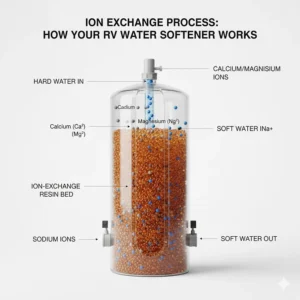
The science behind water softening is elegantly simple yet remarkably effective. Portable water softener for RV units use a process called ion exchange to remove hardness minerals from your water supply.
Inside each softener tank, thousands of tiny resin beads are coated with sodium ions. As hard water flows through the tank, the calcium and magnesium ions in the water are attracted to the resin beads. These hardness minerals stick to the beads while the sodium ions are released into the water. The result? Soft, mineral-free water flows to your RV’s plumbing system.
After processing several hundred or thousand gallons (depending on grain capacity), the resin beads become saturated with calcium and magnesium. At this point, regeneration becomes necessary. You simply pour table salt into the top of the unit and flush it with water. The concentrated salt solution flows through the resin, forcing the trapped minerals to release and wash away down the drain. Fresh sodium ions replace them, and the softener is ready for another cycle.
The U.S. EPA WaterSense program notes that modern water softening technology has significantly reduced water consumption during regeneration. The best portable water softener for RV models now use demand-initiated regeneration systems that are both water- and salt-efficient.
Key Benefits of Using a Portable Water Softener for RV
Protects Your RV Investment
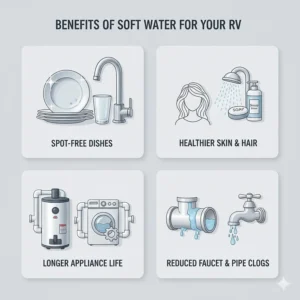
Scale buildup from hard water is like rust – it works slowly but relentlessly. Over time, calcium and magnesium deposits accumulate in your water heater, narrowing pipes and coating heating elements. This forces appliances to work harder, consume more energy, and fail prematurely. A portable water softener for RV prevents this damage before it starts, potentially saving thousands in repair costs.
Improves Personal Comfort
Hard water makes bathing a challenge. Soap doesn’t lather properly, leaving a sticky residue on your skin and hair. Shampoo seems to rinse endlessly, yet your hair still feels coated. With soft water, soap lathers beautifully, rinses completely, and leaves your skin feeling smooth rather than dry and itchy. Many RVers report that using a travel water softener system transformed their shower experience from frustrating to luxurious.
Enhances Cleaning Effectiveness
Dishes washed in hard water emerge spotted and streaked. Laundry feels stiff and looks dingy. Surfaces develop soap scum that requires harsh cleaners to remove. Soft water solves all these problems. Dishes sparkle, clothes feel softer, and cleaning becomes easier because soap actually works as intended. You’ll also use less detergent and soap, saving money over time.
Extends Appliance Lifespan
Your RV’s water heater, ice maker, washing machine, and dishwasher all operate more efficiently with soft water. Without mineral deposits clogging valves, coating heating elements, or restricting water flow, these appliances function as designed and last significantly longer. The Building America Solution Center confirms that water softeners remove calcium and magnesium through ion exchange, preventing the damage these minerals cause to plumbing systems.
Eliminates Unpleasant Tastes and Odors
Hard water often carries a metallic taste or sulfurous “rotten egg” smell. A compact water softener for motorhome removes these minerals, dramatically improving the taste of drinking water, coffee, and tea. Ice cubes become crystal clear rather than cloudy, and cooking water no longer adds off-flavors to your meals.
Choosing the Right Grain Capacity
Grain capacity represents how much hardness a softener can remove before regeneration becomes necessary. Think of it as the fuel tank size – larger capacity means longer intervals between fill-ups.
8,000 Grain Units
Perfect for solo travelers, couples, or weekend camping trips. These lighter, more compact units produce approximately 320-800 gallons of soft water before regeneration, depending on your source water hardness. If you camp occasionally or have a smaller RV, an 8,000 grain portable water softener for camping makes excellent sense.
16,000 Grain Units
The sweet spot for most RV applications. These models produce 640-1,600 gallons per regeneration cycle (at typical hardness levels of 10-25 GPG). For families, full-timers, or extended trips, the 16,000 grain capacity strikes the ideal balance between performance and convenience. Most of our top picks feature this capacity for good reason.
Calculating Your Needs
To determine how much capacity you need, multiply the number of people in your RV by 75 gallons (average daily water usage per person), then multiply by the number of days between desired regeneration cycles. For example:
- 2 people × 75 gallons × 7 days = 1,050 gallons needed
At 10 GPG water hardness, a 16,000 grain softener produces 1,600 gallons – perfect for this scenario. At higher hardness levels (say, 25 GPG), the same softener produces only 640 gallons, meaning more frequent regeneration.
Installation and Setup Made Simple
One of the greatest advantages of a quick connect RV system is the straightforward installation process. Unlike whole-house softeners that require professional plumbing, portable units connect to your RV’s water supply in minutes.
Basic Installation Steps
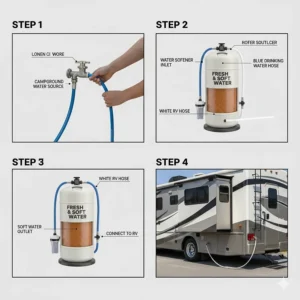
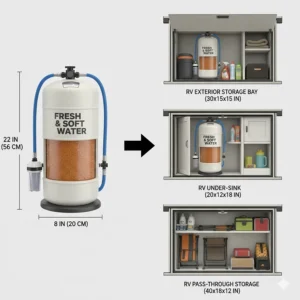
First, position your softener near your RV’s city water connection. Most RVers place it on the ground outside their rig, though some prefer to keep it in a storage bay for protection from weather and theft. Ensure the location provides easy access for adding salt during regeneration.
Connect a standard garden hose from the campground’s water spigot to the softener’s inlet port (usually marked “IN”). Then connect a second hose from the softener’s outlet port to your RV’s city water connection. That’s it – you’re ready for soft water. No tools, no electricity, no complicated setup.
Pre-Flush Procedure
Before your first use, flush the unit to remove any manufacturing residues or dust from the resin beads. Connect both hoses as described, then slowly turn on the water supply. Let water run through the softener and out your RV’s faucets for 5-10 minutes. The water may appear cloudy at first – this is normal and will clear quickly.
Pressure Considerations
Most portable water softener for RV units handle pressures up to 150 PSI, which exceeds typical campground water pressure. However, using a water pressure regulator (recommended for all RVs) protects both your softener and your RV’s plumbing from pressure spikes. Install the regulator between the spigot and softener inlet for optimal protection.
Regeneration Process and Maintenance
Regular maintenance keeps your mobile water treatment unit performing optimally for years. The regeneration process restores the resin beads’ softening capacity and takes less than an hour from start to finish.
When to Regenerate
Signs that regeneration is needed include:
- Decreased water softness (soap doesn’t lather as well)
- Water spots returning to dishes and fixtures
- Reaching the estimated gallon capacity for your unit
Many RVers regenerate every 2-3 weeks during active use, though this varies based on water hardness and consumption. Some travelers regenerate before long trips to ensure maximum capacity at their destination.
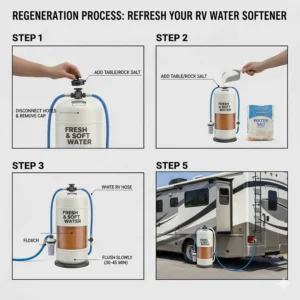
Step-by-Step Regeneration
Start by disconnecting the softener from your RV and locating a drain (campground drain, toilet, or suitable outdoor area). Remove the cap from the top of the unit and pour in the recommended amount of table salt – typically 1 box for 8,000 grain units or 2 boxes for 16,000 grain models.
Add water to create a brine solution (some units have marked fill lines). Let the brine sit for 15-30 minutes to dissolve the salt completely. Then slowly backflush the unit by running water through in reverse (from outlet to inlet). Continue flushing until the water runs clear, usually 3-5 minutes.
Long-Term Care
Every 3-6 months, perform a deep cleaning to remove any sediment or iron buildup. If your source water is particularly dirty, consider adding an inline filter before the softener to protect the resin beads. Some RVers sterilize their softener annually by flushing with a diluted chlorine bleach solution (following manufacturer instructions).
Store your rechargeable softener cartridge properly during off-season periods. Regenerate the unit, then seal it with the included caps to prevent water loss and maintain the resin in good condition. Store in a protected area away from freezing temperatures.
Comparing Portable Water Softener for RV vs Traditional Systems
| Feature | Portable RV Softener | Whole-House System |
|---|---|---|
| Installation | Tool-free hose connection | Professional plumbing required |
| Portability | Easily transported | Permanent installation |
| Cost | $150-$350 | $1,000-$3,000+ |
| Regeneration | Manual, 15-30 minutes | Automatic, scheduled |
| Capacity | 8,000-16,000 grains | 24,000-80,000+ grains |
| Best For | RVs, boats, mobile use | Permanent homes |
Maximizing Your Investment
Water Testing for Optimal Performance
Before purchasing any lightweight camping filtration system, test your typical water sources. Inexpensive test strips reveal hardness levels in seconds, helping you choose the right capacity and understand regeneration frequency. Many portable water softener for RV manufacturers include test strips with purchase.
Combining Filtration and Softening
For ultimate water quality, many RVers use both filtration and softening. Install an inline filter before your softener to remove sediment, chlorine, and particulates. This pre-filtration protects the resin beads from fouling and extends the softener’s lifespan. After softening, you’ll have clean, soft water throughout your RV.
Travel Tips for RV Water Softeners
When moving between campgrounds, drain your softener completely to reduce weight and prevent spills. Use the included caps or plugs to seal both ports. Store the unit upright in a secure location where it won’t roll during transit. If you frequently relocate, consider a dedicated storage bag or container for your softener and accessories.
Seasonal Considerations
In freezing conditions, never leave your portable water softener for RV exposed to cold. Water trapped in the resin can freeze and crack the tank. If you camp in winter, bring the softener inside when temperatures drop below 32°F. During hot summer months, shade the unit to prevent UV degradation of plastic components and keep water temperature from getting too high.
Common Problems and Solutions
Low Water Pressure
If you notice reduced flow after installing your softener, check for kinked hoses or partially closed valves. Ensure you’re using proper 3/4″ diameter hoses rather than narrower garden hoses. Clean any inline filters that may have become clogged. If pressure remains low, your unit may need regeneration or the resin could be fouled with sediment.
Resin Channeling
Over time, resin beads can compact and create channels where water flows through without adequate contact. This reduces softening effectiveness. To fix this, periodically backwash your unit vigorously to redistribute the resin. During regeneration, gently stir the resin with a long-handled spoon to break up any clumps.
Iron Staining
Red-brown staining indicates iron in your water, which can coat resin beads and reduce softening capacity. Install a pre-filter rated for iron removal before your softener. Clean fouled resin using a commercial iron removal solution designed for water softeners, following the product instructions carefully.
Salt Bridging
In humid conditions, salt can form a hard crust (bridge) above the water level during regeneration, preventing proper brine formation. If regeneration becomes ineffective, check for salt bridging. Break up any hard crust with a long tool, ensuring salt can fully dissolve. Store salt in airtight containers between regeneration cycles.
Environmental Considerations
Water and Salt Usage
Modern portable water softener for RV models use significantly less water during regeneration than older designs. A typical 16,000 grain unit uses approximately 15-25 gallons per regeneration cycle – a small price for the benefits received. Salt consumption averages 2-4 boxes per month for most RVers, costing less than $10.
Discharge Impact
The saltwater discharge from regeneration contains concentrated chloride, which can harm aquatic ecosystems if released into sensitive areas. When possible, discharge into approved drains or septic systems. Avoid regenerating near lakes, streams, or other natural water bodies. Many campgrounds provide designated areas for this purpose.
Reducing Environmental Footprint
Choose demand-initiated regeneration patterns based on actual usage rather than fixed schedules. This minimizes unnecessary water and salt consumption. Consider sharing a softener with neighboring RVers if you’re staying at one location for extended periods. Proper maintenance extends your unit’s lifespan, reducing the environmental impact of manufacturing replacements.
Budget-Friendly Alternatives and Enhancements
DIY Water Testing
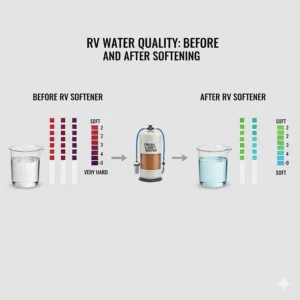
While commercial test kits cost $10-20, you can perform a simple soap test at home. Fill two bottles with water from your source – one untreated and one from your softener. Add a few drops of liquid dish soap to each and shake vigorously. Hard water produces little lather and lots of curdy residue, while soft water creates abundant suds.
Homemade Pre-Filters
Protect your compact water softener for motorhome with an inexpensive inline sediment filter ($15-30). Install it between the water source and softener inlet. Change the filter cartridge every 2-3 months or when flow decreases. This simple addition can double your resin’s lifespan.
Multi-Purpose Use
Maximize your investment by using your portable water softener for RV beyond camping. Take it to vacation rentals with hard water, use it for car washing to prevent water spots, or connect it to your home’s outdoor faucet for pool filling. The versatility justifies the purchase many times over.
How to Choose the Best Portable Water Softener for RV for Your Needs
Selecting the perfect portable water softener for RV involves matching features to your specific camping style, RV size, and water quality expectations. Let me walk you through the decision-making process that ensures you invest wisely.
Consider Your RV Type and Size
Class A Motorhomes: These larger rigs with full bathrooms, kitchens, and sometimes washers/dryers benefit from 16,000 grain capacity models. The On The Go OTG4-DBLSOFT or Essential RV Water Softener provide adequate capacity for high water consumption without constant regeneration.
Class B and C Motorhomes: Mid-size RVs work well with standard 16,000 grain units. The VEVOR RV Water Softener or PRO+AQUA WS-P-16 offer excellent performance without overwhelming compact storage spaces.
Travel Trailers and Fifth Wheels: These towable RVs vary significantly in size, but most benefit from 16,000 grain capacity. Consider the RVGUARD Portable Softener for its comprehensive accessory package that simplifies setup at each new campsite.
Truck Campers and Small Trailers: Compact rigs with limited storage may prefer the On The Go OTG4-StdSoft 8,000 grain model. Its smaller footprint and lighter weight make storage and handling easier, while still delivering excellent soft water performance.
Evaluate Your Camping Frequency
Weekend Warriors: If you camp 1-2 weekends monthly, an 8,000 or 16,000 grain unit provides plenty of capacity. You might regenerate only once or twice per season, making any of our recommended models appropriate. Focus on value and ease of use rather than maximum capacity.
Extended Trip Travelers: Month-long summer adventures or snowbird migrations benefit from larger capacity. The On The Go OTG4-DBLSOFT 16,000 grain double standard model produces 40% more soft water, reducing regeneration frequency during extended stays.
Full-Time RVers: Living in your RV full-time makes water quality critical. Invest in premium models like the Essential RV Water Softener or PRO+AQUA WS-P-16 with proven durability. The higher upfront cost becomes negligible when amortized over years of daily use.
Assess Typical Water Conditions
Research the hardness levels in regions where you commonly camp. If you frequent Southwest destinations with extremely hard water (20+ GPG), larger capacity prevents constant regeneration. Conversely, Pacific Northwest camping with softer water (under 10 GPG) extends regeneration intervals significantly.
Invest in water hardness test strips to check conditions upon arrival at new campgrounds. This data-driven approach optimizes regeneration timing and helps predict when your softener will need attention.
Budget Considerations and Long-Term Value
While prices range from $150-$350, consider the total cost of ownership rather than just initial purchase price. Cheaper models that fail after one season ultimately cost more than quality units lasting 5-10 years.
Calculate annual costs including salt ($60-100), replacement parts if needed, and your time for regeneration and maintenance. Premium models often include better warranties, more durable materials, and superior customer support that justify higher prices.
Remember that a portable water softener for RV prevents expensive repairs to water heaters, faucets, and appliances. Even basic models typically pay for themselves within 2-3 years through reduced maintenance and extended appliance lifespan.
Brand Reputation and Support
Established brands like On The Go have served RVers since the early days of portable water softening, building reputations through consistent quality and reliable support. Newer brands like VEVOR offer competitive pricing with improving quality, though long-term reliability remains less proven.
Read verified customer reviews focusing on long-term experiences rather than initial impressions. Issues that appear after months or years of use reveal more about quality than first-week satisfaction. Look for patterns in feedback about regeneration ease, durability, and customer service responsiveness.
Advanced Tips: Optimizing Your RV Water Softener Performance
Pre-Filter Integration
While not mandatory, adding a sediment pre-filter before your compact water softener for motorhome dramatically extends resin lifespan. A basic 5-micron filter ($20-30) removes dirt, sand, and rust particles that can foul resin beads. Change the filter cartridge every 2-3 months or when you notice flow reduction.
For well water or particularly dirty sources, consider a dual-stage pre-filter removing both sediment and chlorine. Carbon filtration before softening improves taste while protecting resin from chlorine degradation.
Testing and Monitoring
Develop a routine testing protocol upon arrival at new campgrounds. Quick hardness tests take 30 seconds and provide valuable data for optimizing regeneration schedules. Track results in a camping journal along with campground names, creating a reference for future visits.
Some sophisticated RVers use TDS (total dissolved solids) meters to monitor water quality before and after softening. While not essential, this data helps identify when regeneration becomes necessary before performance noticeably declines.
Regeneration Efficiency
Maximize regeneration effectiveness by using the correct salt quantity. More isn’t better – excess salt wastes money without improving performance. Follow manufacturer recommendations precisely, typically 1-2 boxes of table salt depending on grain capacity.
Allow adequate brine contact time. Rushing regeneration by immediately flushing after salt addition produces incomplete regeneration. Let the brine solution sit for 20-30 minutes, allowing thorough penetration of the resin bed before flushing.
Dual-Softener Strategy
Some full-timers traveling through extremely hard water regions employ two portable water softener for RV units in series. The first unit handles the bulk of hardness removal, while the second polishes the water to near-zero hardness. This approach extends time between regenerations and delivers exceptionally soft water.
While doubling your investment and space requirements, the dual-softener method can make sense for those prioritizing ultimate water quality and maximum convenience. Alternatively, rotate between two units, always having a freshly regenerated backup ready when the primary unit reaches capacity.
Troubleshooting Common Issues
Inadequate Softening
If your water doesn’t feel soft despite recent regeneration, several culprits may be responsible. First, verify you used adequate salt during regeneration – underfilling prevents complete resin recharge. Second, check for resin channeling by backflushing vigorously to redistribute beads. Third, test your source water hardness – extremely hard water may exhaust capacity faster than expected.
In rare cases, resin beads themselves may be degraded by chlorine, iron, or age. After 5-7 years of heavy use, resin replacement becomes necessary. Fortunately, replacement resin costs $30-50 and installation requires no special tools.
Slow Flow Rates
Restricted water flow indicates possible problems requiring attention. Examine all hoses and connections for kinks, clogs, or partially closed valves. Remove and inspect inline filters, replacing if dirty or damaged. If problems persist, the resin bed may be compacted or clogged with sediment.
Perform a thorough backwash, running water backward through the unit at high pressure for 5-10 minutes. This expands the resin bed and flushes out accumulated debris. For persistent issues, remove the softener, shake it vigorously to loosen compacted resin, then backwash again.
Salty Taste in Water
Detecting salt taste after regeneration suggests incomplete rinsing. Always flush your quick connect RV system thoroughly after regeneration until water tastes normal – typically 5-10 minutes of continuous flow. If salt taste persists beyond initial post-regeneration use, you may be over-salting during regeneration or your resin bed may be compromised.
Check the seal between the softener cap and tank body. A faulty seal allows brine to bypass the resin during regeneration, leaving salt residue that affects taste. Replace worn O-rings or gaskets to restore proper sealing.
Physical Damage Prevention
Transport your portable water softener for RV carefully to avoid damage. Drain completely before moving to reduce weight and prevent sloshing damage. Store upright in a secure location where it won’t roll or fall during transit. Use provided caps or plugs to seal ports, preventing debris entry and moisture loss.
Inspect your unit regularly for cracks, particularly around threaded connections and the base. Hairline cracks can worsen with freeze-thaw cycles or rough handling. Early detection allows repair or replacement before catastrophic failure ruins a camping trip.
Real User Experiences and Testimonials
Thousands of RVers have transformed their camping experience with portable water softener for RV systems. Here’s what real users report about the difference soft water makes.
Full-Timer Success Stories
“After three years of fighting hard water stains and replacing our water heater, we finally invested in the On The Go double standard softener. Within a week, we noticed our skin felt better, soap lathered properly, and our shower glass actually stayed clear. Best $300 we’ve spent on our RV.” – Karen & Mike, Arizona
“We travel constantly through the Southwest where water hardness exceeds 25 GPG regularly. Our VEVOR softener regenerates weekly, but it’s worth every minute of effort. No more scale buildup in our tankless water heater, and our ice maker produces clear cubes instead of cloudy mineral chunks.” – David, New Mexico
Weekend Warrior Feedback
“As occasional campers, we debated whether a water softener made sense. After one season with the PRO+AQUA unit, we’re believers. Even regenerating just once or twice per summer, the difference in shower quality and dish washing is remarkable. Our kids actually enjoy showers now!” – Lisa, Colorado
“I’m mechanically challenged, so I worried about setup and maintenance. The RVGUARD softener proved incredibly simple – just connect hoses and you’re done. Regeneration takes 20 minutes every few weeks. If I can manage it, anyone can.” – Tom, Texas
Environmental Impact and Sustainability
Responsible RVers increasingly consider environmental implications of their choices. Understanding the ecological impact of portable water softener for RV use helps you make informed decisions aligned with your values.
Water Consumption
Modern portable water softener for RV models use approximately 15-25 gallons per regeneration cycle. While this might seem wasteful, consider the alternative – replacing corroded pipes, failed water heaters, and damaged appliances creates far greater environmental impact through manufacturing, shipping, and disposal.
Efficient regeneration timing minimizes water use. Regenerate only when necessary based on capacity calculations rather than arbitrary schedules. A 16,000 grain unit processing 10 GPG water produces 1,600 gallons before needing regeneration – the resulting soft water delivers tremendous value compared to regeneration water consumed.
Chloride Discharge
Salt-based softeners discharge sodium chloride into wastewater during regeneration. In natural ecosystems, even small amounts of chloride can harm aquatic life. Responsible RVers regenerate into approved drains or septic systems rather than directly into waterways.
Many campgrounds provide specific areas for wastewater disposal. Use these facilities for regeneration discharge. If boondocking, research local regulations about greywater disposal. Some areas prohibit salt discharge entirely, requiring you to transport waste to approved facilities.
Long-Term Sustainability
Quality portable water softener for RV units last 5-10 years with proper care, reducing environmental impact through longevity. Cheap disposable units failing after one season create unnecessary waste. Investing in durable models aligns with sustainable practices while delivering better performance.
When your softener eventually reaches end-of-life, recycle plastic components and properly dispose of resin beads according to local regulations. Many RV supply stores accept old softeners for proper recycling. Resin can sometimes be composted or used in gardening applications after confirming it’s free from contamination.
Expert Tips from Full-Time RVers
Site Selection Strategy
Experienced RVers recommend calling ahead to campgrounds and asking about water hardness. Some parks publish water quality reports online. Keep notes about water conditions at your favorite locations, so you know when to expect regeneration needs.
Quick Test Routine
Develop a quick testing habit upon arrival. Keep test strips handy and check water hardness before connecting any hoses. If hardness exceeds 10 GPG, deploy your softener immediately. This proactive approach prevents any hard water damage to your RV’s system.
Storage Solutions
Many full-timers build custom mounts or storage boxes for their portable water softener for RV. A simple wooden platform with retention straps keeps the unit secure during travel. Some creative RVers install their softener permanently in a basement storage bay with quick-disconnect fittings for easy removal when regeneration is needed.
Regeneration Scheduling
Rather than waiting for performance to decline, successful RVers maintain a regeneration log. Track gallons consumed (many RVs have meters) or simply mark calendar dates based on typical usage. Proactive regeneration ensures consistent soft water and prevents sudden hard water exposure.
Portable Water Softener for RV vs Salt-Free Conditioners
Many RVers wonder about the difference between traditional salt-based water softeners and salt-free water conditioners. Understanding these distinctions helps you make an informed decision for your specific needs.
Traditional Salt-Based Systems
Salt-based portable water softener for RV units use ion exchange to physically remove calcium and magnesium from water, replacing these minerals with sodium ions. This process genuinely softens the water, eliminating the minerals that cause scale buildup, soap scum, and other hard water problems. The result is water that lathers easily, rinses cleanly, and leaves no mineral deposits.
These systems require periodic regeneration with salt, typically every 2-4 weeks depending on usage and water hardness. While this adds a minor maintenance task, the benefits far outweigh the minimal effort required. Salt costs remain negligible – usually less than $10 monthly for most RVers.
Salt-Free Conditioners
Salt-free systems (also called “descalers” or “water conditioners”) don’t actually remove hardness minerals. Instead, they use template-assisted crystallization (TAC) or electromagnetic fields to alter the mineral structure, preventing scale formation while keeping minerals in the water. The water technically remains “hard,” but minerals don’t stick to surfaces as readily.
While salt-free systems require no regeneration and produce no wastewater, they don’t deliver the same benefits as true softeners. You won’t experience the silky feeling of soft water on your skin, soap won’t lather as effectively, and you may still see some mineral deposits. For RV applications where space is limited and true water softening matters, salt-based portable water softener for RV units remain the superior choice.
Regional Water Hardness Considerations
Water hardness varies dramatically across the United States, impacting how frequently you’ll need to regenerate your travel water softener system and which capacity makes the most sense for your travels.
Southwest and Mountain States
Arizona, Nevada, New Mexico, and Utah rank among the hardest water regions in America, with levels frequently exceeding 20-30 GPG. These extreme conditions demand more frequent regeneration – sometimes weekly for 16,000 grain units with heavy use. RVers spending significant time in these areas should consider the larger Double Standard models or plan for regular maintenance cycles.
Midwest and Great Plains
States like Kansas, Nebraska, Iowa, and much of Texas also feature very hard water, typically 15-25 GPG. Campground water quality varies significantly, making a portable water softener for RV particularly valuable. Testing upon arrival helps you anticipate regeneration schedules and protect your RV’s systems.
Southeast and East Coast
While generally softer than Western states, many Southeastern locations still benefit from water softening. Coastal areas often have moderately hard water (7-15 GPG), while inland regions vary considerably. Florida’s limestone geology produces hard water in many areas despite coastal proximity.
Pacific Northwest
Washington, Oregon, and Northern California enjoy some of America’s softest natural water, frequently below 5 GPG. RVers in these regions may question whether a compact water softener for motorhome makes sense. However, many still use softeners for consistency when traveling to harder water regions.
Hard Water’s Impact on Specific RV Appliances
Different RV appliances suffer varying degrees of damage from hard water exposure. Understanding these vulnerabilities helps you appreciate the protective value of a mobile water treatment unit.
Tankless Water Heaters
Modern tankless water heaters are particularly susceptible to hard water damage. The narrow passages and high-temperature heating elements create ideal conditions for rapid scale accumulation. Manufacturers often require water softening to maintain warranties. A single season of hard water exposure can reduce efficiency by 30-50% and may require professional descaling or complete replacement.
Traditional Tank Water Heaters
While more tolerant than tankless models, tank water heaters still suffer significantly from hard water. Scale builds up on the heating element and tank bottom, reducing heating efficiency and shortening lifespan. An anode rod meant to last 3-5 years may deteriorate in 18 months with hard water exposure. Regular flushing helps, but prevention through softening proves far more effective.
Ice Makers
RV ice makers and refrigerators with ice dispensers struggle with hard water minerals. Scale clogs the narrow water lines and coating moving parts, leading to reduced ice production and eventual failure. Soft water keeps these systems running smoothly and produces crystal-clear ice cubes rather than cloudy, mineral-filled ones.
Washing Machines
For RVers with onboard laundry facilities, hard water creates multiple problems. Minerals combine with detergent to form sticky deposits on clothes, making them feel stiff and look dingy. Scale builds up on heating elements and inside pump housings, shortening appliance lifespan. Soft water allows detergents to work effectively, keeps clothes softer, and extends washing machine longevity by years.
Seasonal RV Water Softener Strategies
Your portable water softener for RV maintenance needs change with the seasons. Smart RVers adapt their approach to maximize performance and convenience year-round.
Spring and Summer Peak Season
During active camping months, establish a regular regeneration routine. Many full-timers regenerate every two weeks regardless of water consumption, ensuring consistent performance. Keep extra salt on hand at your campsite, and regenerate before long holiday weekends when campground facilities may be crowded.
Consider dedicating a specific day for water system maintenance – perhaps Sunday mornings or Wednesday afternoons. This routine prevents regeneration from interfering with your adventure plans. Document your regeneration dates in a camping log to track patterns and optimize scheduling.
Fall Preparation
As camping season winds down, perform a thorough cleaning and regeneration before storage. This ensures your rechargeable softener cartridge enters dormancy in optimal condition. If you’re winterizing your RV, coordinate softener storage with your overall winterization process.
Some RVers leave their softener regenerated and sealed for winter, then perform a fresh regeneration before spring camping begins. Others prefer to drain completely and add fresh resin protectant. Follow your manufacturer’s specific recommendations for off-season storage.
Winter Considerations
For winter camping enthusiasts, protecting your lightweight camping filtration system becomes critical. Never allow your softener to freeze while filled with water. Keep it inside the heated RV when temperatures drop, or invest in insulated covers designed for cold-weather use.
Some determined winter campers connect their softener only when temperatures rise above freezing, disconnecting and draining before evening cold snaps. While labor-intensive, this approach allows soft water benefits even in challenging conditions.
✨ Ready to Transform Your RV Water Quality?
🚰 Stop struggling with hard water damage and start protecting your RV investment today. The portable water softener for RV models highlighted above represent the best solutions available in 2026. Whether you’re a weekend warrior or full-time traveler, soft water makes every aspect of RVing more enjoyable – from luxurious showers to spot-free dishes and longer-lasting appliances. Click any product name to check current prices and read verified customer reviews!
❓ Frequently Asked Questions
❓ How often do I need to regenerate my portable water softener for RV?
❓ Can I use my portable water softener for RV with well water at campgrounds?
❓ Will a portable water softener for RV reduce water pressure in my RV?
❓ Is the sodium from water softening safe to drink for people on low-sodium diets?
❓ Can I leave my portable water softener for RV connected during winter camping?
Conclusion
Investing in a portable water softener for RV transforms your camping experience from frustrating to fantastic. Whether you choose the industry-leading On The Go OTG4-DBLSOFT, the budget-friendly VEVOR RV Water Softener, or any of our other top picks, you’re protecting your RV investment while enjoying immediate comfort improvements.
The benefits extend far beyond softer showers and spot-free dishes. You’re preventing costly appliance damage, reducing maintenance headaches, and ensuring your RV’s plumbing system operates at peak efficiency for years to come. With prices ranging from $150-$350, these compact units deliver tremendous value that pays for itself through extended appliance lifespan and reduced cleaning product consumption.
Remember that water hardness varies dramatically across America’s campgrounds. A portable water softener for RV provides consistency wherever your travels take you – from the calcium-rich Southwest to the mineral-laden Midwest. Installation takes minutes, regeneration requires minimal effort, and the improvement in your RV lifestyle is immediate and dramatic.
Don’t let hard water silently damage your RV or compromise your comfort. Choose the right portable water softener for RV from our expert-reviewed selections, follow our maintenance guidelines, and enjoy soft, clean water at every destination. Your RV’s plumbing system – and your skin, hair, and dishes – will thank you for making this smart investment in your mobile lifestyle.
Recommended for You
- 7 Best Salt Free Water Softeners 2026
- 7 Best Salt Based Water Softeners 2026
- 7 Best Water Softener Under $1000: Top Picks 2026
Disclaimer: This article contains affiliate links. If you purchase products through these links, we may earn a small commission at no additional cost to you.
✨ Found this helpful? Share it with your friends! 💬🤗
